The offsite that fails never ends badly. That's the trap. Everyone leaves happy, the conversation was "really rich." Six weeks later nobody can name what was decided. Nothing was.
We get the call the following year, with the same brief: "we'd like this one to actually lead somewhere."
In Quebec, it has a name and the name matters
On 4 and 5 September 1962, Jean Lesage's cabinet met in secret at a fishing camp on Lac à l'Épaule, in what is now the Laurentides wildlife reserve. They came out having decided to call an election on nationalizing electricity, one of the defining moments of the Quiet Revolution.
Ever since, Quebec has called this kind of meeting a lac-à-l'épaule. The Office québécois de la langue française defines it as an important meeting held somewhere remote, where partners set an organization's broad direction and plan the actions to take. There's no English term: Anglophone workplaces in Quebec use the French one, and the plural is lacs-à-l'épaule.
Hold on to what everyday use has dropped: the expression comes from a meeting that decided something, not one that exchanged views.
What wrecks the two days
You show up without numbers. This is the number one cause. The leadership team arrives with impressions, and you can't refute an impression. "We've been losing a lot of people this year." "Not really." The question gets settled by seniority, not fact: two hours gone on a point a single table closes in four minutes.
Your turnover rate isn't up for debate. You read it.
The boss speaks first. And that's the end of it: everything after is a comment on their position. Nobody contradicts the person who signs their performance review.
The agenda covers twelve topics. Across two days that's eighty minutes each with breaks, which means no real arbitration. A packed agenda isn't rigour, it's a refusal to choose.
And team building eats half the clock. Nothing against kayaking, but kayaking isn't the meeting.
Three weeks out: what has to be on the table
The rule we apply: no topic goes on the agenda without its data.
An HR plan that ignores the company's margin and timeline isn't a plan, it's a wish list.
Have each leader complete the HR self-assessment on their own, without comparing notes. The gaps are often worth more than the answers: when the CEO scores structure an 8 and the VP of operations scores it a 3, you've found your first real subject.
For the engagement picture, a short survey sent three weeks ahead is enough. Not a sixty-question annual survey. You won't have time to act on it, and a survey you don't process costs more than none.
How the two days run
On day one, interpretation is banned until lunch. You read the numbers and explain nothing. It feels artificial for about twenty minutes, and it saves a full day of arguing about facts that were never established.
Then everyone writes before anyone speaks: three minutes, silent, on paper, before you go around the table. That's what neutralises the boss-speaks-first problem.
The 30 days that decide everything
This is where most offsites die.
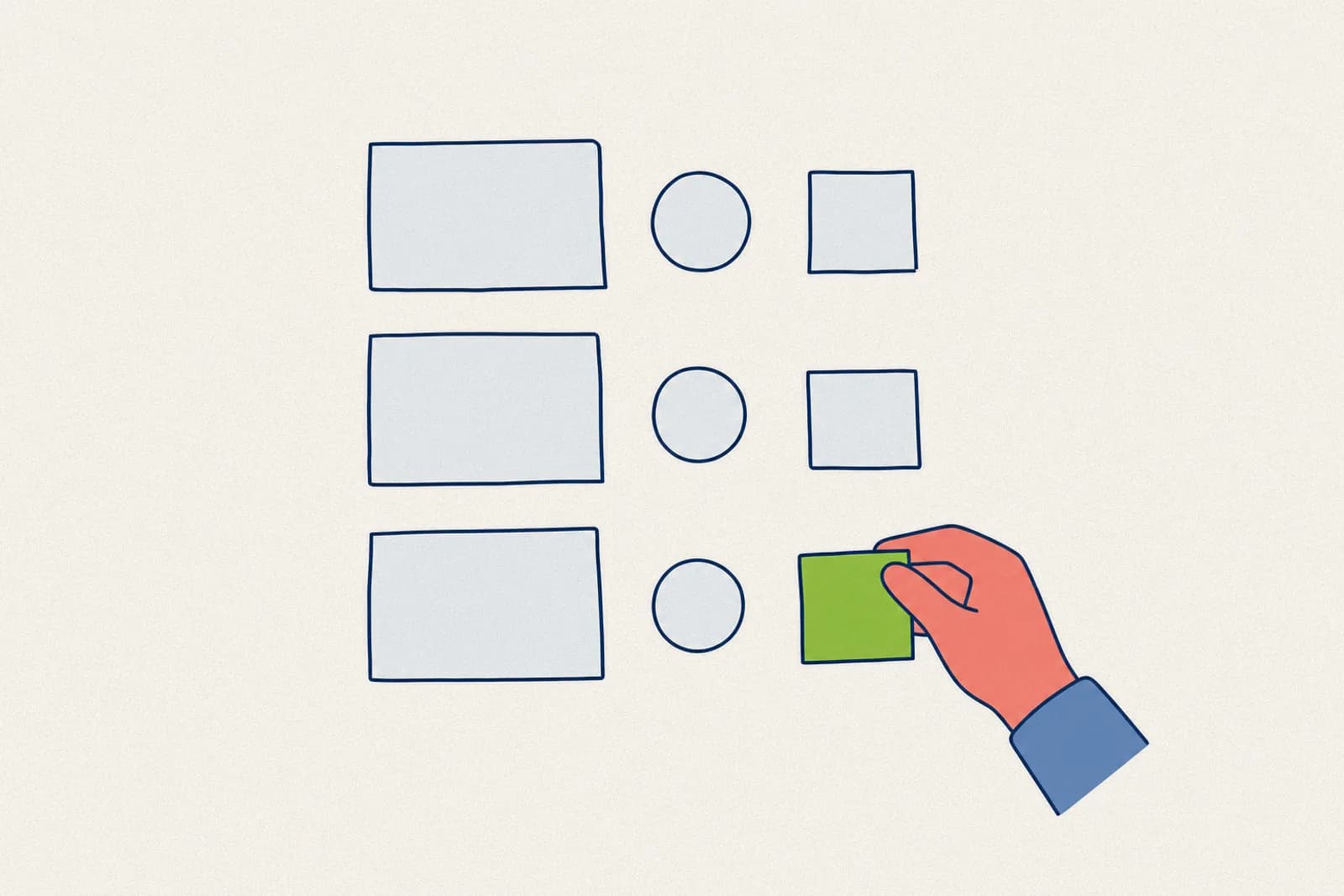
Before the first month is out
- The write-up goes out within 72 hours. After that, everyone recalls the version that suits them.
- Every decision has a named owner. A decision owned by "leadership" is owned by nobody.
- Every decision has a first-milestone date, not an end date.
- All three decisions are announced to the teams, including what was set aside and why.
- A 45-minute follow-up is already in the calendar, 30 days out.
That fourth point is the one everyone skips. Telling your teams what got set aside matters as much as announcing what got picked. Otherwise everyone waits for their topic, and silence reads as a soft no.
An offsite isn't judged on Sunday night. It's judged on day 30: has anything changed for someone who wasn't in the room?
Do you need an outside facilitator?
Disclosure: this is part of what we do at Inlead RH (inleadrh.ca). Read on knowing that.
You don't need one if your leadership team is four or five people who already say the real thing out loud, if the subject doesn't pit anyone against anyone and if one person can facilitate without defending their own position. Then prepare the data well, it matters more than the facilitation.
You do need one in three situations: the CEO is part of the subject and can't be judge and party, two leaders are competing over the same resource or last year's offsite produced nothing.
The rest of the time, a firm that tells you otherwise is selling its calendar.
When last year's offsite produced nothing, the day itself was rarely the problem. An organizational diagnostic finds out which it was, before anyone books a room.