Every autumn, the same sequence. The survey goes out, participation comes back at 72%, a score of 7.4 out of 10 is presented to the leadership committee and the whole thing repeats next year at 7.3. Nothing moved in between, because nothing was decided.
The tool isn't the problem. Survey platforms are fine. Taking the measurement got confused with doing something about it.
The headline score means nothing
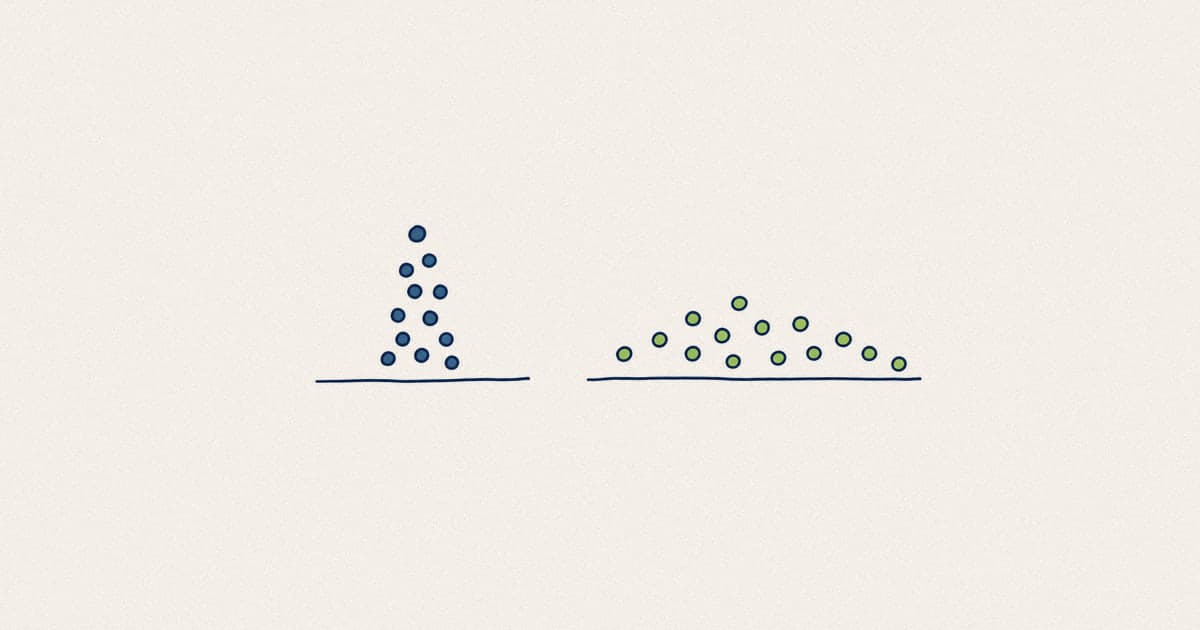
A 7.4 is an average. It can describe a company that is uniformly fine, or one where three teams live at 9 and a fourth at 4. Those two situations call for different interventions, and the score makes them indistinguishable.
The first thing to do is throw away the average and look at the spread between units.
The confidentiality threshold and the trap it creates
A four-person team, segmented and published, is no longer anonymous. The manager knows who said what, or believes they do, which does the same damage. The rule we apply: no results are published for any group under five respondents. Those teams get combined with a neighbouring one, never displayed alone.
Announce the threshold before collection, not after. That's the difference between a survey people answer honestly and one they answer strategically. If you promise anonymity, don't also ask for department, tenure, shift and employment status: three crossed filters are enough to identify somebody in a mid-sized company.
Measuring is not diagnosing
The survey tells you that people do not feel recognized. Never why. For that you have to leave the questionnaire behind:
- exit interviews that ask one real open question
- cross-referencing with turnover rate by team
- focus groups run by someone who is not the boss.
A survey is a smoke detector. It wakes you up. It does not tell you where the fire is, and it puts nothing out.
When the survey points at recognition, which it almost always does, resist the urge to buy a programme. Recognition is not a program: it's a management habit, and the survey only confirms it's missing.
Sixty questions is fifty too many
A long questionnaire feels rigorous. Mostly it buys you a drop-off rate and a results table nobody has time to work through.
What gets cut first:
- Double-barrelled questions. "My manager is available and gives me useful feedback": if someone answers 3, you have no idea which half they scored.
- Questions you'll do nothing with. If the answer can't trigger any action this year, don't ask it. Asking creates an expectation.
- Satisfaction. "Are you satisfied with your job" measures resignation as much as engagement.
Write statements as observable behaviour, not feelings. "I know what's expected of me this week" can be fixed. "I feel valued" can only be discussed.
The survey generator builds a short version from the themes you tick. Better that than a sixty-question template found online.
Cadence: one long, three short
Annual alone is too slow. Something that appears in February waits until November to get measured, and by then the people it affected have left.
What works in a company of 20 to 500:
The short survey doesn't replace the annual one. Its job is to let you correct course while there's still time.

The response rate is itself a result
A rate falling from 78% to 54% over two years tells you more than any statement on the questionnaire does.
Be wary of external comparison too. Benchmarking against an "industry standard" supplied by the vendor who sold you the platform fills a meeting and leads to no decision. Your only useful benchmark is you, last year, by team.
The comments are the survey
Most leadership teams skim the free-text box and spend their time on the numbers. That's backwards: the scores tell you where to look, the comments tell you what's actually happening.
Read every one, in full, before you look at a single chart. Don't run them through sentiment scoring, which flattens forty specific complaints into one cheerful percentage. Group them by the thing being described, not by tone and count how many separate people raised each. Three unrelated people describing the same broken process is a finding. A furious paragraph is a person who needs a conversation, not a policy.
The 30-day rule
The strongest predictor of next year's response rate is not questionnaire length or send timing. It is whether anything visibly changed after the last one.
After collection
- Share results within two weeks, including the bad ones.
- Announce one concrete decision within 30 days.
- Name what will not change and say why.
- Return to that decision at the next survey.
Three actions announced and never delivered cost more than zero actions.
The third point is the one that gets skipped, and it pays the best. Saying "we're not touching the schedule this year, and here's why" closes the file. Silence leaves it open, and it comes back at the next survey as a score that's slipped.
The seven mistakes that make a survey useless
Each one is free to fix. Together they explain almost every engagement survey that changed nothing.
The 7 most common mistakes
- Never communicating the results.
- Asking 80 questions.
- Comparing only against an industry benchmark.
- Running the survey once a year.
- Asking for feedback without ever acting on it.
- Hiding or ignoring employee comments.
- Failing to train managers to act on their own results.
Those seven are where our employee engagement mandates start. We measure climate by manager, never as a company average, because the average hides the exact team that needs help.