Gallup found only 14% of employees strongly agree that their performance reviews inspire them to improve and just 29% call their reviews fair. That is a form problem: most templates rate who someone is instead of what they delivered. Nobody can argue with a rating on their attitude, or improve on one.
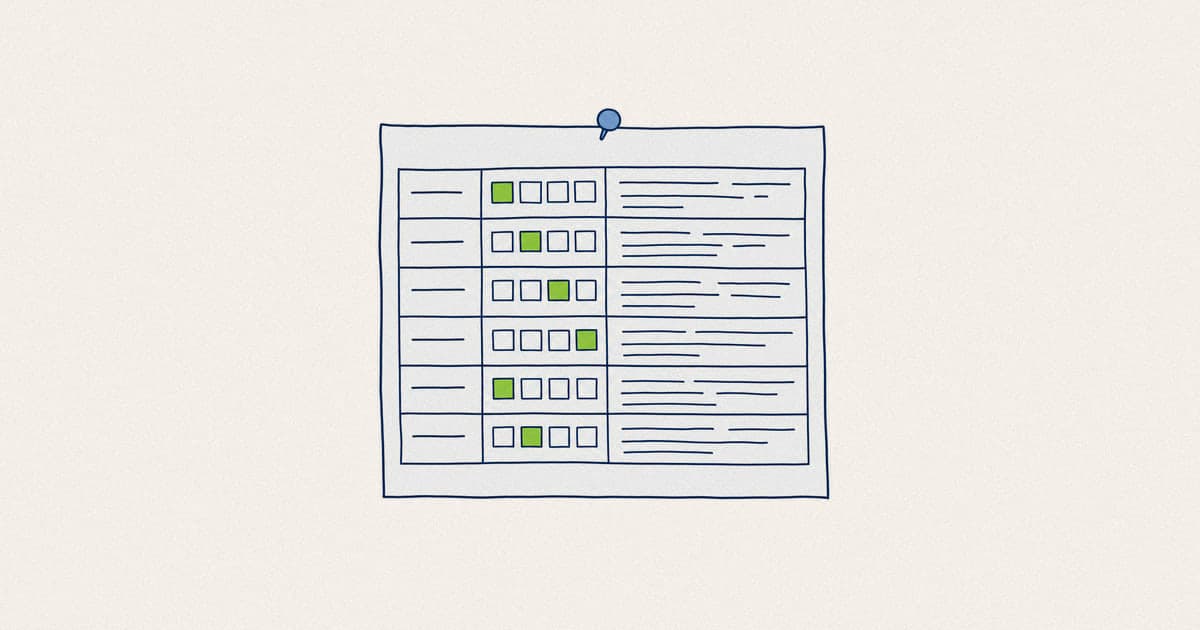
Here is a grid that measures what happened. Copy it, then reword it for your roles.
The performance review template, ready to copy
Six rows. Not twelve. Twelve criteria produce twelve average ratings and zero conversation.
If you cannot write anything in the right-hand column, you cannot give the rating. That one rule fixes half of what goes wrong in a performance appraisal template.
For the job mastery row, measure the gap against a reference: a skills matrix per job family.
The rating scale trap: everyone lands on 3
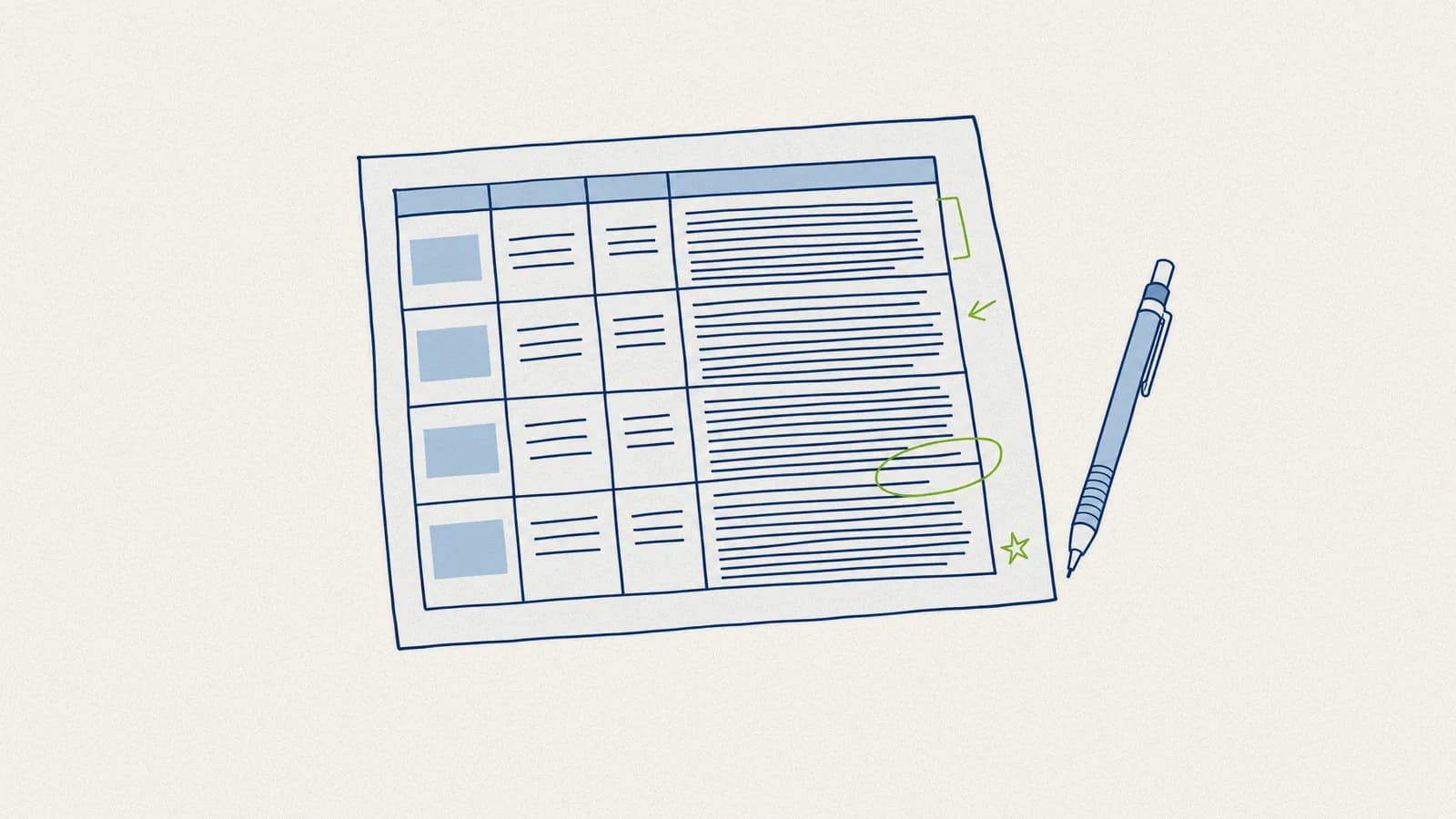
On a scale of 1 to 5, the middle swallows everything. In the five-point grids we get asked to rebuild, the overwhelming majority of ratings are 3s, including for people the manager privately calls outstanding or struggling.
That is not a manager problem, it is a scale problem: an odd number of levels hands out a safe harbour, and a busy person takes it. Move to four levels. No middle left, so you have to lean.
A rating that triggers nothing is decoration and employees see it within one cycle. A 3 triggers nothing on purpose: meeting the bar for your job is a good outcome, not a consolation prize.
Keep the review out of the salary conversation
Two meetings. Eight to twelve weeks apart.
Once money is on the table, the employee stops listening and starts negotiating the rating. The manager nudges a rating up to justify a raise already decided. You lose both conversations.
The order that works: the work first, the pay decision second, anchored to a salary band that already exists.
The mid-year checkpoint does most of the work
Thirty minutes in June. No ratings, no form.
Two questions. "Across the six criteria, where do you feel solid and where don't you?" Then: "What do I need to change on my side?"
The second matters most, and it is the one everyone skips. It turns a verdict into an adjustment made together. It also makes the annual review boring. No rating landing out of nowhere in December. A review that surprises the employee is a management failure, not a moment of truth.

What the employee evaluation form must contain
The form, line by line
- The period covered, with exact dates.
- The six criteria, each with its rating and written evidence.
- Last year's goals, with their real status.
- Three goals for the next period, each with a first-milestone date.
- The self-assessment, completed before the meeting on the same grid.
- A comment box the employee signs, not editable by the manager.
- The mid-year checkpoint date, already in the calendar.
That second-to-last line is the one most often cut. A form where only management writes is not an evaluation. It is a notice.
Have the self-assessment done on the same grid, before the meeting. When someone marks themselves a 2 where you had them at a 4, you have the real subject of the meeting.
One review a year is not a performance system
Cappelli and Tavis made the case in Harvard Business Review years ago: the annual review holds people accountable for last year, which is the wrong job if you want better work this year.
That does not mean kill the review. Companies that scrapped ratings entirely deleted their only written record and quietly brought something back. Keep the annual form for the decision and the paper trail. Put the improvement work in the mid-year checkpoint and in weekly feedback, where it can still change an outcome.
If your exit interviews repeat "I never knew where I stood" while your turnover rate climbs, the form is not your problem. Nobody is having the conversation, and no amount of recognition covers for that.
The HR self-assessment from Inlead RH (inleadrh.ca) places your performance management against the rest of your HR structure. About ten minutes.
A review cycle is one part of a set. Org design, job descriptions and competencies hold each other up, and putting that whole set in place is HR structure work.